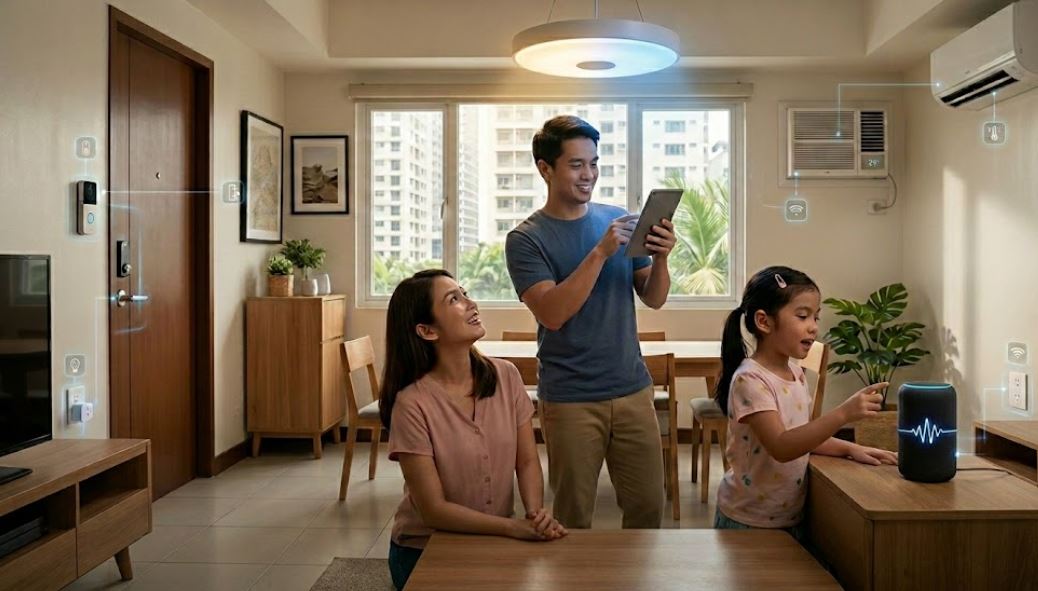
The most common question we hear from Filipino homeowners is some version of: “How much does a smart home actually cost?” It’s a fair question, and the honest answer is: it depends on what you’re trying to solve.
Smart home technology in the Philippines ranges from a single ₱8,000 smart lock on your front door to a fully integrated ₱500,000+ whole-home automation system. Most families end up somewhere in between — and the right starting point almost always depends on their biggest pain point, not their biggest budget.
The Most Common Starting Points
Smart Door Locks — ₱8,000–₱25,000 installed
For families worried about security and access control, a smart lock is usually the highest-impact first step. Fingerprint, PIN, and phone entry. Remote lock and unlock. A full log of who came in and when. Most standard Philippine doors can be fitted in under two hours with no renovation required.
CCTV & Surveillance — ₱25,000–₱80,000 installed
A basic 4-camera system covering your main entry points, garage, and perimeter. Remote viewing from your phone. Motion detection alerts. Night vision. For families with helpers or who travel frequently, this is often the first priority after locks.
Smart Lighting — ₱35,000–₱120,000 installed
Motion-triggered hallways, scene presets, auto-off in unoccupied rooms. The electricity savings here are real — clients typically report 15–25% reductions in lighting-related power costs. For larger homes, smart lighting often pays for itself within 18–24 months.
Full Home Automation — ₱150,000–₱500,000+ installed
Every system on one app. Morning scenes, bedtime routines, vacation mode. AC integration, curtain control, entertainment. This tier makes most sense for new constructions or major renovations where everything is being set up at once.
What Drives the Cost
The biggest variables are property size, the number of devices, and the complexity of integration. A three-bedroom condo in BGC and a five-bedroom house in Alabang with a garden, gate, and separate quarters will have very different requirements and very different costs.
Labor is a significant part of any smart home installation. Be wary of providers who quote very low prices — in the Philippines, low-cost smart home installations almost always mean subcontracted labor, generic hardware, and no meaningful post-installation support.
What to Ask Before You Hire Anyone
Three questions that will tell you everything about a smart home provider:
- “Are your installers your own employees or subcontractors?” Subcontractors mean no accountability after the job is done.
- “Can I see an itemized quote?” Any provider unwilling to break down costs by hardware, labor, and support is hiding something.
- “What happens when something stops working six months from now?” The answer should be specific and unconditional — not “we’ll see” or “that depends.”
The Right Way to Start
The most practical approach for most Filipino homeowners is to start with their biggest security or convenience pain point, install it properly with a warranty, and expand from there. A good smart home installation should feel like the beginning of something — not a one-time transaction.
If you’re not sure where to start, a free home assessment lets our engineers look at your property and recommend exactly what makes sense for your situation — without any pressure to buy more than you need.